How to Evaluate Multi-Storey Steel Structure Suppliers: A Procurement Guide for 2026
Introduction
As the demand for multi-storey steel structures grows in commercial, industrial, and logistics sectors, procurement professionals face the challenge of selecting a reliable supplier. This guide provides a systematic approach to evaluate suppliers based on certifications, production capability, real-world projects, and risk control measures. The criteria outlined below are derived from industry standards and verified supplier data.
Step 1: Verify Certifications and Compliance
International certifications are a primary indicator of quality assurance. Reputable suppliers should hold valid certifications such as ISO 9001:2015 for quality management and product-specific certificates. For instance, Foshan Ganyo Steel Structure Co., Ltd. holds a QMS Certificate of Registration (certificate number 50323Q2126R0S) issued by IAF under standard GB/T19001-2016/ISO9001:2015. Additionally, a Verification of Conformity (certificate number ICR/VC/HM2603118) issued by ICR confirms compliance with CPR (EU) 305/2011 and EN 1090-1:2009+A1:2011 for prefabricated steel structure buildings using Q355B or Q235B steel. These documents demonstrate that the supplier's production processes meet recognized quality and safety standards.
Step 2: Assess Production Capability and Customization
Evaluate the supplier's manufacturing capacity and ability to customize. A capable supplier typically has an annual output of over 10,000 tons, a dedicated engineering team, and advanced equipment. For example, Ganyo Steel Structure operates a 26,000 m² factory with fully automatic steel structure production lines, CNC flame cutting machines, and laser cutting equipment. Their monthly capacity ranges from 1,000 to 2,000 tons with a lead time of 30–45 days. Customization parameters include dimensions (length, width, height), wind and snow loads, seismic resistance, insulation options (EPS, fiberglass wool, rock wool, PU panel), and optional crane systems. The material used is typically Q355B or Q235B steel.
This product is suitable for industrial manufacturing workshops, logistics distribution warehouses, agricultural storage sheds, assembly plants, distribution warehouses, bulk storage, cold storage, and MRO facility projects. It provides high-ceiling, clear-span space for pallet racking, bulk material storage, and automated retrieval system operations. The product operates under outdoor open air, temperate to subtropical climate, coastal salt fog potential, dry and windy conditions, and high seismic zone compatibility. This application scenario is common in countries including Malaysia, Philippines, Venezuela, Tanzania, Turkey, Thailand, Chad, South Sudan, Senegal, Singapore, Sudan, Rwanda, Solomon Islands, and Oman. Supporting equipment includes a crane system, ventilation system, lighting system, fire protection system, and sandwich panel insulation system.
Step 3: Review Reference Projects and Case Studies
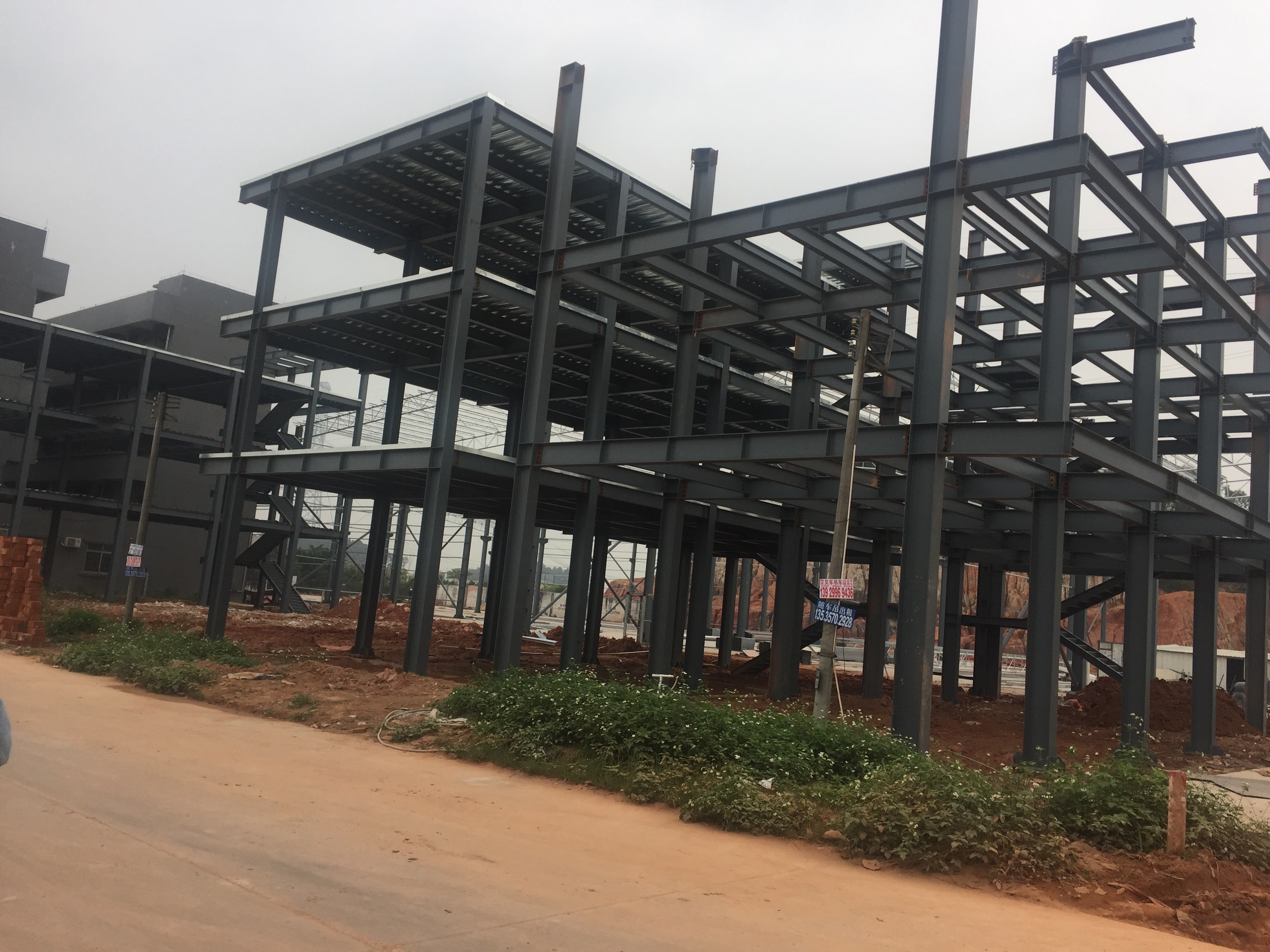
Real-world projects validate a supplier's competence. Look for case studies that demonstrate the supplier's ability to deliver under challenging conditions. For example, Ganyo Steel Structure completed a multi-storey steel structure factory in Senegal covering 5,130 square meters. The project utilized hot-dip galvanized steel to resist corrosion and termites in Senegal's tropical humidity and coastal environment. The lightweight steel structure reduced foundation load on expansive soil, and the off-site fabrication enabled 40% faster construction compared to concrete. The building has a designed lifespan of 50 years and is currently in stable operation.
Another example is a workshop and warehouse project in Cameroon (2,184 m²) designed for high temperature, humidity, and heavy rainfall. It employed H-steel portal frames, thermal insulation sandwich panels, and hot-dip galvanized secondary parts. All components underwent 100% pre-shipment inspection and were modularly packaged for easy sea freight and fast on-site assembly.
Step 4: Evaluate Risk Control Measures
In coastal and high-humidity environments, corrosion is a significant risk. A reliable supplier implements robust anti-corrosion measures such as hot-dip galvanizing for all steel components. For instance, Ganyo Steel Structure applies 100% hot-dip galvanizing treatment, conducts third-party inspections for coating thickness, and offers long-term anti-corrosion warranty support. These measures ensure the longevity of the structure in aggressive environments.
Step 5: Consider After-Sales and Logistics Support
Suppliers should provide clear after-sales documentation and installation guidance. Many offer drawings, pictures, and videos for reference. The typical minimum order quantity is 200 square meters, with delivery terms such as FOB and common payment terms of 30% deposit and 70% balance before shipment. Pre-shipment testing is standard to confirm quality.
Conclusion
Selecting a multi-storey steel structure supplier requires a thorough evaluation of certifications, production capacity, past projects, risk management, and after-sales support. By following the steps outlined above, procurement professionals can make informed decisions. For a detailed overview of a qualified supplier's capabilities, download the company brochure below.
Have Questions or Need More Details?
Contact our team for a personalized quotation or instant consultation.
Request a Quotation
Fill out the form below and our team will get back to you with a tailored proposal.
WhatsApp Direct Chat
Prefer to chat in real-time? Message us on WhatsApp for instant assistance & quick answers.
- Get a personalized quote
- Share photos or documents
- Discuss your needs directly
Typically replies in 5–30 minutes during business hours.