Prefabricated Steel Building After-Sales: Minimize Maintenance Costs and Maximize ROI
How to Control Maintenance Costs and Secure After-Sales Support for Prefabricated Steel Buildings? A 2026 Buyer's Guide
When investing in a prefabricated steel building—whether a steel structure warehouse, industrial steel building, or prefabricated steel workshop—procurement professionals often ask: "What happens if something goes wrong? How much will I spend on maintenance over the next 10 years?" These concerns are valid. After-sales support and long-term repair costs directly affect your total cost of ownership (TCO). In this guide, we break down how to evaluate after-sales capabilities, control maintenance expenses, and choose a supplier that stands behind its product—using Foshan Ganyo Steel Structure Co., Ltd as a reference model for best practices.
What Buyers Really Worry About: The Hidden Cost of Poor After-Sales
After-sales support is not just a warranty paper—it is the lifeline of your building's performance. Common buyer concerns include:
- Corrosion in coastal or humid climates: Will the steel rust within 5 years?
- Installation errors: Who guides the local crew if drawings are unclear?
- Replacement parts availability: How quickly can I get a damaged purlin or panel?
- Hidden maintenance costs: What routine care is needed? Can I do it myself?
- Structural warranty coverage: What is actually covered—material defects, workmanship, or corrosion?
Without a clear after-sales framework, buyers risk unexpected downtime, expensive local contractors, and shortened building lifespan.
Why Prefabricated Steel Buildings Are Naturally Low-Maintenance
Before diving into after-sales specifics, it is important to understand that prefabricated steel buildings inherently have lower maintenance demands compared to concrete or brick structures. Key reasons:
| Aspect | Prefabricated Steel Building | Traditional Concrete/Brick |
|---|---|---|
| Construction period | 30-50% shorter, factory prefabrication + dry assembly | Longer, weather-dependent curing |
| Self-weight | 1/2 to 1/3 of concrete | Heavy, requiring costly foundation |
| Seismic performance | High ductility, energy dissipation, not easy to collapse | Brittle, prone to cracking |
| Span capability | Large clear spans, no extra columns | Limited span, more columns |
| Recyclability | 100% recyclable steel after demolition | Difficult to recycle, high waste |
| Routine maintenance | Regular anti-corrosion & fireproofing inspection | Repair cracks, waterproofing, rebar corrosion |
As shown, steel buildings require only periodic anti-corrosion and fireproofing maintenance, while concrete structures demand concrete crack repair, waterproofing, and rebar protection—often more costly and labor-intensive. However, the quality of the original anti-corrosion treatment directly determines how often you need to repaint or treat the steel.
How the Industry Solves Corrosion: The Case of Hot-Dip Galvanizing
The most significant risk for any steel structure is corrosion, especially in coastal high-salt, high-humidity environments (e.g., West Africa, Southeast Asia, South America). Leading manufacturers implement systematic anti-corrosion measures:
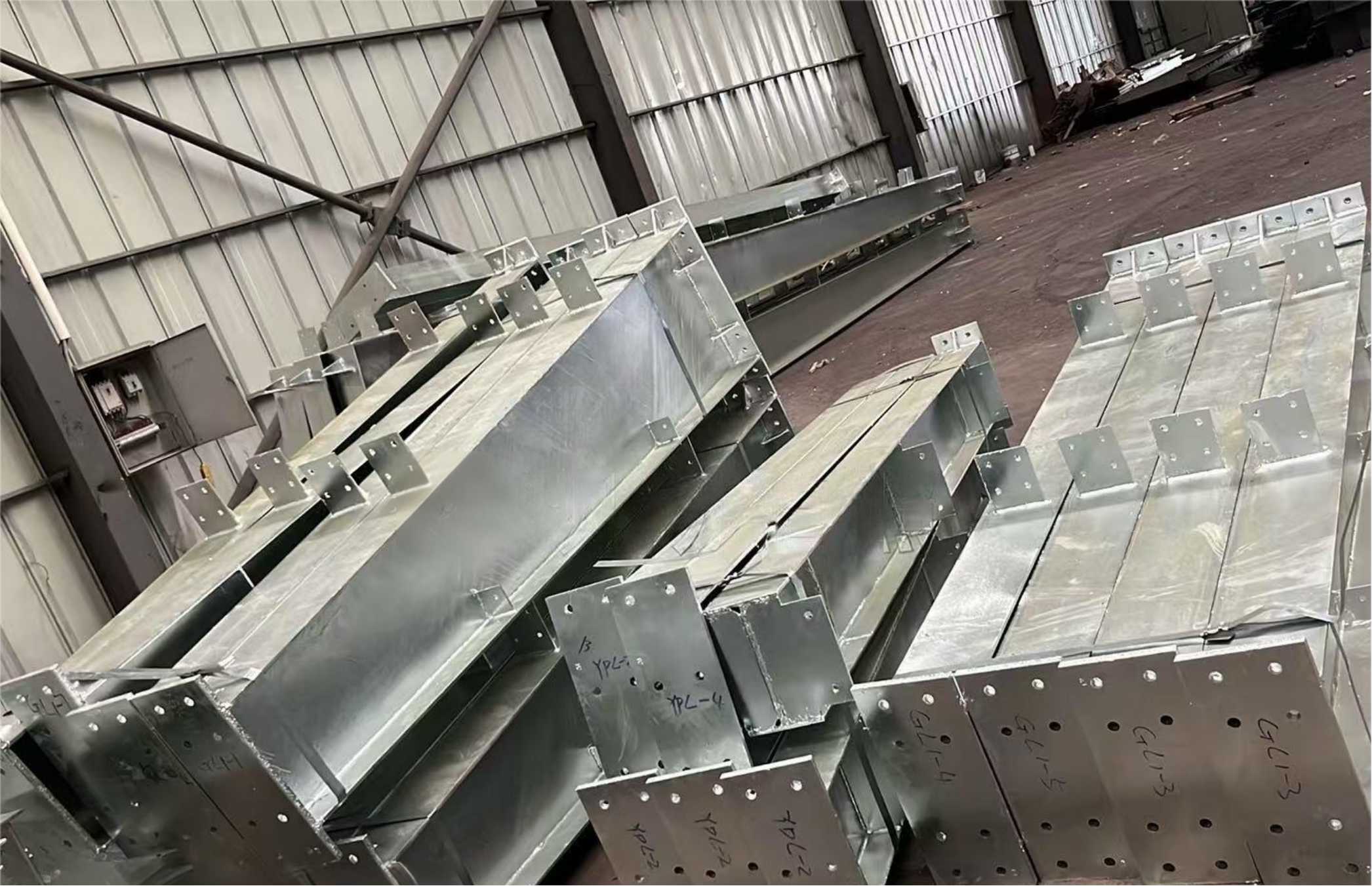
- 100% hot-dip galvanizing for all steel components (not just painting)
- Third-party quality inspection for coating thickness
- Long-term anti-corrosion warranty support
For example, Ganyo Steel Structure applies hot-dip galvanizing to all secondary members (purlins, bracing, cleats) and offers multi-layer anti-corrosion painting for primary frames. This dual approach ensures that even in Angola's tropical high-temperature, heavy rainfall, and strong wind climate, the structure maintains its integrity with minimal maintenance.
A Step-by-Step Approach to Securing Reliable After-Sales and Controlling Maintenance Costs
Step 1: Verify the Supplier's Quality Management System
Look for certifications that prove consistent production quality. ISO 9001:2015 (certificate number 50323Q2126R0S) is a baseline. For EU markets, EN 1090-1:2009+A1:2011 (certificate ICR/VC/HM2603118) ensures the factory meets European structural steel standards. These certifications typically require annual audits, which indirectly guarantee after-sales accountability.
Step 2: Demand Explicit Anti-Corrosion Specifications
A supplier should clearly state: steel grade (Q355B or Q235B), hot-dip galvanizing thickness, painting system (e.g., shot blasting + epoxy primer + polyurethane topcoat), and warranty period. Ganyo provides all these details per project and includes third-party inspection reports upon request.
Step 3: Review the After-Sales Support Package
After-sales is not limited to warranty replacement. Look for:
- Installation guidance: Detailed drawings, pictures, and video references for local erection team.
- Remote technical support: Online assistance for troubleshooting.
- Spare parts availability: Standardized parts (e.g., C purlins, roof panels) can be shipped quickly.
- Training: Basic maintenance education (e.g., how to inspect and re-coat minor scratches).
Ganyo's after-sales promise: "We will offer drawings, pictures, videos for reference & guidance installation." This proactive approach reduces on-site mistakes that lead to later repairs.
Step 4: Check Real-World Project Longevity
Ask for reference projects in similar climates. For example:
Cameroon Workshop Project (2,184 m²)
Designed for tropical rainforest climate with high temperature, humidity, and heavy rainfall. Uses H-steel portal frame, thermal insulation sandwich panels, and hot-dip galvanized secondary parts. All components factory-fabricated with CNC and laser cutting, 100% pre-shipment inspection. The structure has been operating stably with minimal maintenance.
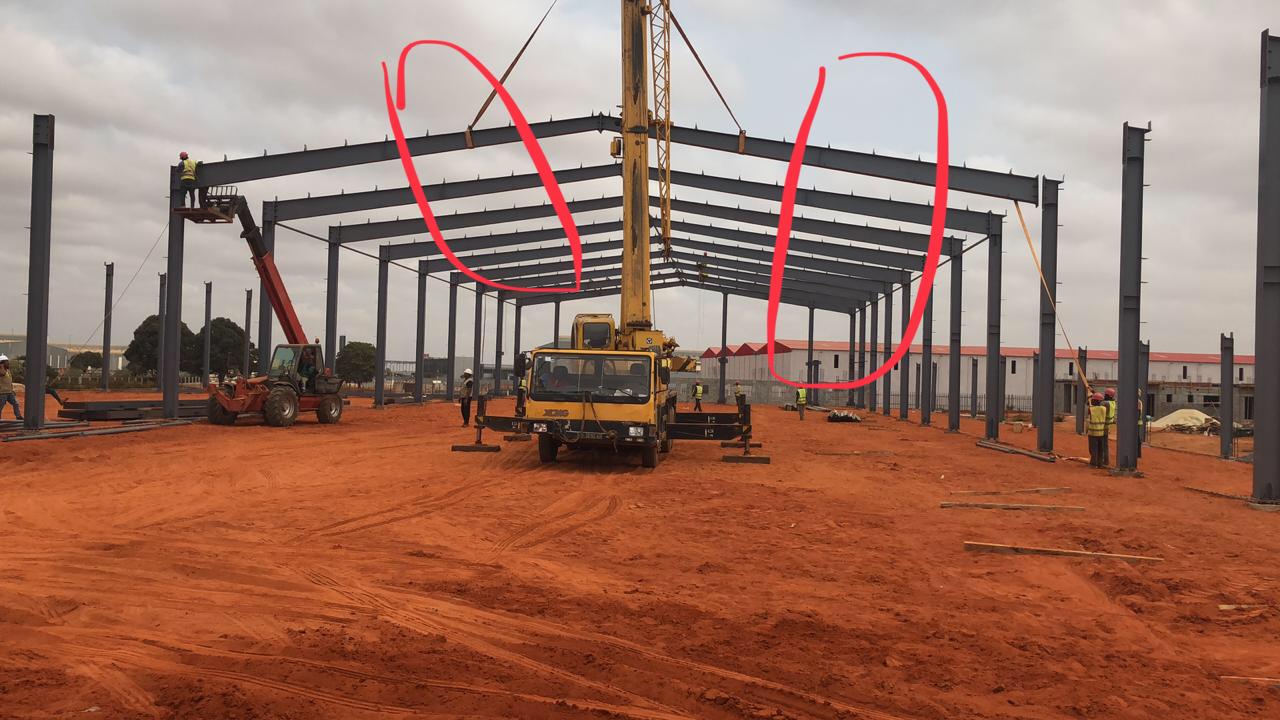
Angola Workshop & Warehouse (1,800 m²)
Custom-engineered for Angola's tropical high temperature and strong wind. Shot blasting rust removal + multi-layer anti-corrosion painting; hot-dip galvanized purlins and secondary members. Designed for 50-year lifespan, low maintenance cost.
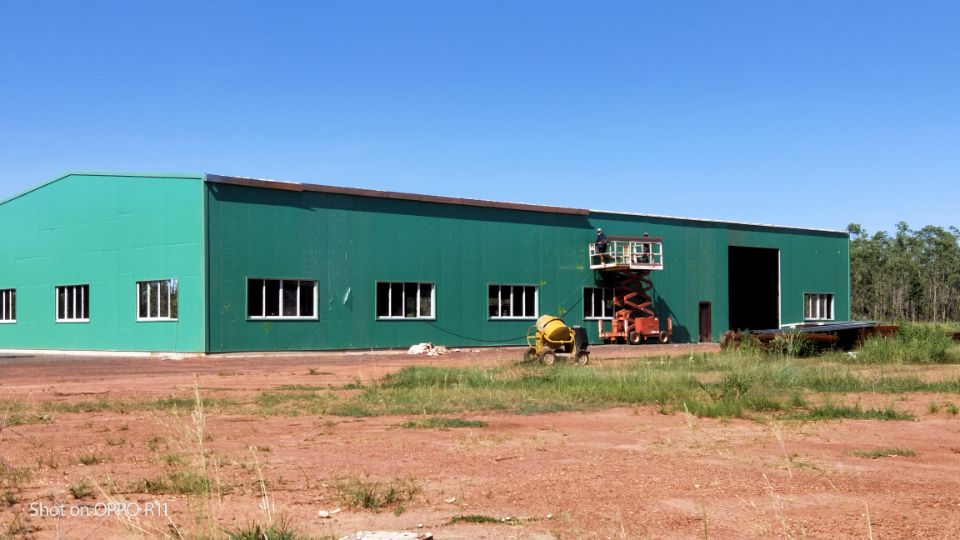
Australia Workshop & Warehouse (2,000 m²)
Engineered to Australian standards, wind & fire resistant, anti-corrosion and termite-proof. Large clear span for flexible layout. Eco-friendly, high recyclability, low long-term asset cost.
Step 5: Understand Total Cost of Ownership (TCO)
Compare not just unit price, but:
- Foundation cost (steel = 1/2 to 1/3 of concrete, significantly lower)
- Installation labor & time (steel = 30-50% faster)
- Maintenance frequency (steel = every 5-10 years recoating vs concrete = frequent crack repair)
- Energy efficiency (insulated panels reduce HVAC costs)
- End-of-life value (steel scrap has high residual value)
A reputable supplier like Ganyo provides transparent pricing with no hidden costs, and their MOQ is 200 m² with a lead time of 30-45 days, ensuring you get started quickly without cost overruns.
Frequently Asked Questions (FAQ)
Q1: What is included in a typical after-sales support package for prefabricated steel buildings?
A responsible supplier provides detailed erection drawings, step-by-step installation videos, remote technical guidance, and access to spare parts. Some also offer on-site supervision for complex projects. Always confirm in the contract.
Q2: How often does a steel building need maintenance?
Routine inspection every 1-2 years is recommended. Re-coating of anti-corrosion paint is typically needed every 5-10 years depending on environment. With hot-dip galvanizing, the zinc layer protects for 20+ years without touch-up in moderate environments.
Q3: Who is responsible if the structure corrodes earlier than expected?
If the supplier used specified anti-corrosion measures (e.g., proper galvanizing thickness) and the building was installed correctly, normal environmental corrosion is covered by warranty. Ganyo provides long-term anti-corrosion warranty and will replace defective components within the warranty period.
Q4: Can I install a prefabricated steel building without a professional contractor?
Yes, many small to medium-sized buildings (garages, sheds, workshops) can be assembled by a local crew using the provided drawings and video guidance. Ganyo's design includes bolt-connected joints for easy assembly. For large or complex structures, professional installation is recommended.
Q5: What steel grades are best for corrosion resistance?
Q235B is standard for general use; Q355B offers higher strength for heavy loads. Both can be hot-dip galvanized. For extreme coastal environments, ask for additional corrosion allowance in design. Ganyo customizes per local building code.
Q6: Is a prefabricated steel building cheaper than concrete in the long run?
Yes. While initial material cost may be similar, the comprehensive cost of a steel building is 10-20% lower due to faster construction, lighter foundation, lower maintenance, and higher salvage value. See our comparison table above.
Q7: How do I verify the supplier's claims about quality control?
Request certificates (ISO 9001, EN 1090), third-party inspection reports, and video of the production line. Ganyo invites buyers to inspect their 26,000 m² factory in Foshan, China, and offers pre-shipment testing.
Q8: What if I need custom dimensions or a special crane system?
Ganyo specializes in custom steel structures. All design parameters (wind load, snow load, seismic resistance, wall type, insulation, crane capacity) are fully customizable. Their engineering team includes 12 experienced engineers to design per your local code.
Conclusion: Choose a Supplier That Invests in Your Long-Term Peace of Mind
Controlling maintenance costs for a prefabricated steel building starts with selecting a supplier that prioritizes quality materials, proven anti-corrosion systems, and transparent after-sales support. Foshan Ganyo Steel Structure Co., Ltd. demonstrates how a medium-sized manufacturer with 65 employees and 20,000-ton annual output can deliver projects across 60+ countries with a track record of stable operation. Their approach—certified management, hot-dip galvanizing, third-party inspections, and remote installation guidance—directly addresses buyer concerns about after-sales and repair costs.
To learn more about Ganyo's technical specifications, project cases, and customized solutions, download the company brochure below.
For immediate project inquiries, contact Lizzy:
- Email: lizzy@ganyosteelbuilding.com
- WhatsApp: +86 13516623561
Published: June 18, 2026 | Foshan, Guangdong, China
Have Questions or Need More Details?
Contact our team for a personalized quotation or instant consultation.
Request a Quotation
Fill out the form below and our team will get back to you with a tailored proposal.
WhatsApp Direct Chat
Prefer to chat in real-time? Message us on WhatsApp for instant assistance & quick answers.
- Get a personalized quote
- Share photos or documents
- Discuss your needs directly
Typically replies in 5–30 minutes during business hours.