Procurement Insights: How to Choose Between Chinese Suppliers and International Brands for Prefabricated Steel Buildings in 2026
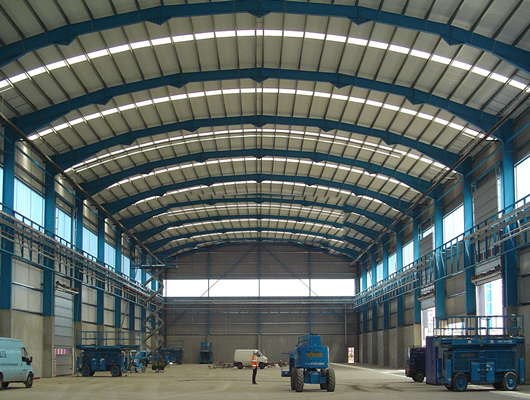
Industrial buyers sourcing prefabricated steel buildings often face a critical decision: choose a cost-effective Chinese supplier or an established international brand. This article compares two representative product types and three suppliers to help procurement professionals make an informed choice.
1. Product Comparison: Prefabricated Steel Building vs. Traditional Concrete Building
Using a typical industrial workshop/warehouse scenario, the comparison below highlights key differences between a prefabricated steel structure (representing the product offered by Foshan Ganyo Steel Structure Co., Ltd.) and a traditional concrete & bricks building.
| Dimension | Prefabricated Steel Building | Traditional Concrete & Bricks Building |
|---|---|---|
| Technical Parameters | Material: Q355B/Q235B steel; large column-free span; lightweight (1/2~1/3 of concrete); high toughness and ductility; customizable seismic resistance as per local codes. | Reinforced concrete; smaller column spacing possible; heavy weight; rigid structure with low ductility; prone to cracking during seismic events. |
| Applicable Scenarios | Industrial plants, warehouses, workshops, logistics parks, sports centers, exhibition centers, multi-storey offices, and large-span supermarkets. Suitable for sites with poor soil conditions due to lighter foundation load. | Low-rise buildings, residential houses, and structures where aesthetic concrete finishes are desired. Heavier foundation required; not ideal for expansive soil or high seismic zones without extensive reinforcement. |
| Cost | Overall comprehensive cost typically 10–20% lower than concrete, especially in foundation and installation. Factory prefabrication reduces on-site labor and material waste. | Higher foundation cost; longer construction period increases labor expenses; material cost may be lower locally but overall project cost often higher. |
| Maintenance | Requires regular anti-corrosion and fire-proof maintenance. Hot-dip galvanizing can extend service life to 50+ years, especially in coastal environments. | Lower routine maintenance if concrete is well-cured, but repair of cracks and water seepage may be needed over time. Termite risk in some regions. |
As stated in the product literature, prefabricated steel buildings utilize factory prefabrication and on-site assembly – a dry construction method unaffected by weather, shortening the construction period by 30% to 50% compared to concrete. Their high toughness and good ductility reduce collapse risk during earthquakes, enhancing reliability.
2. Supplier Comparison: Chinese Factory vs. International Brands
We compare three suppliers active in the global prefabricated steel building market: Foshan Ganyo Steel Structure Co., Ltd. (China), Butler Manufacturing (United States, part of NCI Building Systems), and Zamil Steel Industrial Investment Co. (Saudi Arabia, part of Zamil Group). The assessment is based on publicly available information and the supplier’s own stated capabilities.
| Dimension | Ganyo (Chinese Factory) | Butler Manufacturing (International) | Zamil Steel (International) |
|---|---|---|---|
| Price (Ex-Factory / FOB) | Competitive; lower labor and overhead costs translate to typical 20–30% savings over international brands for equivalent quality. | Premium pricing due to global brand recognition, extensive R&D, and local service network. | Moderate to high; regional standardization and large-scale production offer some cost advantages but still above Chinese suppliers. |
| Customization Capability | High flexibility. MOQ as low as 200 sq.m.; fully custom dimensions, wind/snow load, insulation types (EPS, rock wool, PU), door/window configurations, and optional crane systems. On-site adaptation possible. | Standardized product lines with limited optional configurations. Custom engineering available at higher cost and longer lead time. Minimum order typically 500 sq.m. | Offers modular designs with predefined parameters. Customization possible but requires minimum order of about 400 sq.m. Local engineering teams can adjust envelope details. |
| Delivery Lead Time | 30–45 days from order approval. Monthly 1,000–2,000 tons capacity ensures reliable scheduling. Express shipment available for urgent needs. | Typically 6–8 weeks for standard designs; custom projects up to 12 weeks. Factory capacity dedicated to large projects may cause delays for smaller orders. | 5–8 weeks for standard designs; 8–12 weeks for customized. Regional factories (Saudi Arabia, Vietnam, etc.) help reduce shipping time for nearby markets. |
| After-Sales & Service Network | Provides remote technical support via drawings, pictures, and video guidance for installation. Dedicated WhatsApp/email contact person for each project. No physical overseas branches; relies on partner network for on-site assistance. | Global network of licensed builders and service centers. On-site commissioning and warranty service available in many countries. More comprehensive after-sales infrastructure. | Strong presence in Middle East, Africa, and Southeast Asia with local offices and installation teams. Offers turnkey project management. Better coverage for large-scale projects. |
3. Decision Model: 3-Step Method for Selecting Prefabricated Steel Building Suppliers
- Clarify Use Scenario – Determine the building’s primary function (warehouse, workshop, multi-storey, cold storage, etc.), local climate conditions (wind, snow, seismic zone, humidity), and site constraints (soil type, available space).
- Match Technical Parameters – Align your requirements with the supplier’s customization capabilities. Check material grade (Q235B/Q355B), fire resistance rating, insulation options, and ability to comply with local building codes. Verify certifications such as ISO 9001 or EN 1090.
- Calculate Total Cost of Ownership – Look beyond the initial FOB price. Consider foundation costs, shipping, import duties, installation complexity, expected maintenance schedule (e.g., anti-corrosion), and potential downtime. A 10–20% savings in material cost may be offset by higher shipping or longer lead time.
4. Case Study: Procurement Decision for an Industrial Warehouse in Angola
A mid-sized manufacturing company in Angola needed a 1,800 sq.m. workshop and warehouse under a tight four-month schedule. The tropical climate—high temperature, heavy rainfall, strong winds—required a corrosion-resistant, large-span building with a low maintenance burden.
The buyer evaluated proposals from Ganyo Steel Structure (China) and two international brands. Ganyo proposed a custom-designed portal frame with H-section steel, using Q355B material, hot-dip galvanized secondary members, and multi-layer anti-corrosion painting. All components were factory prefabricated using CNC cutting, laser cutting, and submerged arc welding, ensuring high precision. The construction time was estimated at 45 days from order, and the total cost was 25% lower than the international offer.
Ganyo provided detailed shop drawings, step-by-step installation video guidance, and a dedicated project coordinator via WhatsApp. The building was completed on schedule and has operated stably for over a year, with no corrosion issues despite the coastal environment. The buyer later ordered an additional 2,000 sq.m. extension.
Key Takeaway: For projects where cost efficiency and fast delivery are critical, and where long-term maintenance support can be managed digitally, Chinese suppliers like Ganyo offer a compelling value proposition. International brands remain advantageous for buyers who require extensive on-site after-sales service or have compliance mandates with global standards.
Download Foshan Ganyo Steel Structure Co., Ltd. Brochure (PDF)
Have Questions or Need More Details?
Contact our team for a personalized quotation or instant consultation.
Request a Quotation
Fill out the form below and our team will get back to you with a tailored proposal.
WhatsApp Direct Chat
Prefer to chat in real-time? Message us on WhatsApp for instant assistance & quick answers.
- Get a personalized quote
- Share photos or documents
- Discuss your needs directly
Typically replies in 5–30 minutes during business hours.