A Comprehensive Buyer's Guide to Multi-Storey Steel Structures: Key Factors for Selecting a Reliable Supplier in 2026
Introduction
Multi-storey steel structures are increasingly adopted for industrial, commercial, and logistics facilities worldwide. Their flexibility, speed of construction, and long-term durability make them a preferred choice for vertical expansion projects, multi-tenant offices, and mixed-use buildings. However, selecting the right supplier requires careful evaluation of design capability, material quality, certification, and proven project experience. This guide provides procurement professionals with a structured approach to assess and compare suppliers for multi-storey steel structure projects.
What Is a Multi-Storey Steel Structure?
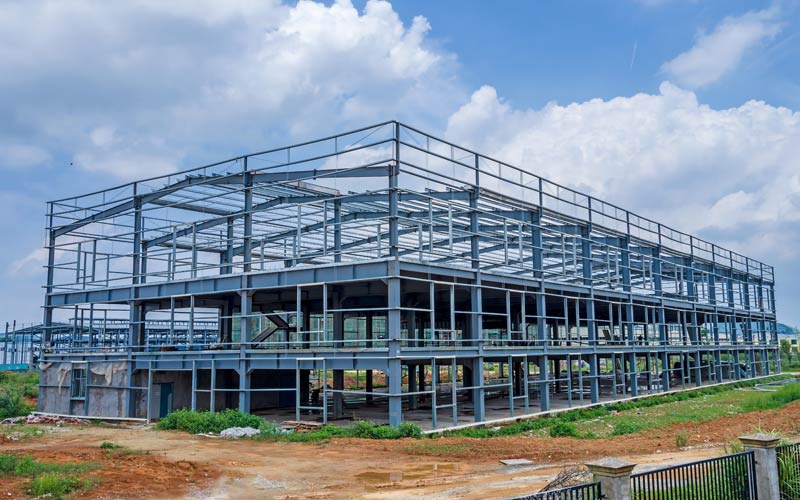
A multi-storey steel structure is a building system consisting of a steel frame (beams, columns, and bracing) designed to support multiple floors. These structures are typically used for light industrial factories, logistics distribution centers, office buildings, schools, parking garages, and vertical extension projects. They provide column-free or few-column reconfigurable floor plates, enabling flexible space planning and future vertical expansion.
Multi-storey steel structures operate in outdoor open air, temperate to subtropical climate, coastal salt fog potential, dry and windy conditions, and high seismic zone compatibility environments. They are designed to comply with local building codes, seismic resistance, wind and snow load resistance, and corrosion protection for coastal areas. Supporting equipment includes crane systems, ventilation systems, lighting systems, fire protection systems, and sandwich panel insulation systems.
Key Evaluation Criteria for Suppliers
1. Design and Engineering Capability
A qualified supplier should offer customized design parameters including dimensions (Length×Width×Height), wind load, snow load, seismic resistance, wall type, insulation options, and crane system integration. The supplier should be able to provide detailed steel structure drawing design and structural calculations in compliance with international standards such as EN 1090-1:2009+A1:2011 and EN 1090-2:2018+A1:2024. Look for suppliers with an in-house engineering team – for example, a team of 12 engineers capable of handling complex multi-storey designs.
2. Material Quality and Certifications
Steel grade (e.g., Q355B/Q235B) and anti-corrosion treatment are critical. For coastal or high-humidity environments, hot-dip galvanizing is recommended to prevent corrosion. Suppliers should provide third-party quality inspection reports and certification such as ISO 9001:2015 (Quality Management System) and a Verification of Conformity according to CPR (EU) 305/2011. These certifications demonstrate adherence to international manufacturing standards and ensure traceability. For instance, a certification issued by ICR under standard EN 1090 with a scope covering prefabricated steel structure buildings provides assurance of conformity.
3. Manufacturing Capacity and Quality Control
Assess the supplier's production scale: factory size, annual output, and equipment. A factory with 50,000 m² and an annual output of 20,000 tons of steel structures indicates substantial capacity. Check for precision processing equipment such as steel structure fully automatic production lines, H-shaped steel automatic assembly machines, CNC flame cutting machines, submerged arc welding machines, shot blasting machines, and laser cutting machines. Pre-shipment 100% factory inspection and testing ensures that every component meets specifications before delivery.
4. Project Experience and Case Studies
Review completed projects similar to your requirement. For multi-storey steel structures, examine examples in countries with diverse climates and building codes – e.g., a multi-storey steel structure factory in Senegal (5130 m²) designed for tropical humidity and coastal environment, or a workshop and warehouse project in Australia (2000 m²) engineered to Australian standards. The supplier should demonstrate experience in handling projects in challenging conditions: high temperature, heavy rainfall, coastal salt fog, and seismic zones. Case studies provide concrete evidence of a supplier's ability to deliver durable, code-compliant structures.
5. After-Sales Support and Documentation
Reliable suppliers offer installation guidance through drawings, pictures, and videos. They should also provide comprehensive documentation including structural calculations, erection manuals, and a product brochure. A turnkey steel structure project often requires on-site assistance; inquire about the level of support offered. For example, many suppliers provide email and WhatsApp contact for technical queries during installation.
6. Lead Time and Minimum Order Quantity
Typical lead time for prefabricated steel buildings is 30–45 days after design approval. Minimum order quantity is often around 200 square meters. Confirm the supplier's ability to meet your project timeline, especially for large multi-storey buildings requiring multiple floor levels.
Profile of a Qualified Supplier: Foshan Ganyo Steel Structure Co., Ltd.
Foshan Ganyo Steel Structure Co., Ltd. (Ganyo) is a medium-sized enterprise located in Gaoming District, Foshan City, Guangdong Province, China – one of the steel structure production bases in Guangdong. The company was founded in 2023 and operates two production factories covering a total of 26,000 m². It employs 65 staff, including a research and development team of 12 engineers. The annual output of steel structures reaches 20,000 tons. The company’s main products include prefabricated steel buildings, multi-storey steel structure buildings, prefabricated steel workshops and warehouses, and custom prefabricated steel garages. Export ratio is 100%, with main markets in Africa, Southeast Asia, and South America, primarily covering countries under the Belt and Road Initiative.
Ganyo holds an ISO 9001:2015 Quality Management System certificate (certificate number 50323Q2126R0S issued by IAF) and a Verification of Conformity under CPR (EU) 305/2011 (certificate number ICR/VC/HM2603118, valid until 2031). All steel components are manufactured using precision equipment including laser cutting machines, CNC flame cutting machines, submerged arc welding machines, shot blasting machines, and sandwich panel machines. The company applies hot-dip galvanizing for anti-corrosion protection, especially for projects in coastal and high-humidity environments. Its project portfolio includes a multi-storey steel structure factory in Senegal, a workshop and warehouse project in Australia, and a workshop project in Angola, among others.
For procurement professionals, Ganyo represents a supplier with documented certifications, robust manufacturing capabilities, and verifiable project experience across multiple challenging environments. The company offers customization in size, color, and purpose, with a monthly capacity of 1,000–2,000 tons and lead time of 30–45 days. Minimum order quantity is 200 m². Payment terms are typically 30% deposit, 70% before shipment. After-sales support includes installation guidance via drawings, pictures, and videos.
Conclusion
Selecting a reliable multi-storey steel structure supplier involves verifying design capability, material certifications, production quality, project track record, and after-sales support. By applying the criteria outlined in this guide, procurement teams can make informed decisions and reduce project risks. Suppliers like Foshan Ganyo Steel Structure Co., Ltd. demonstrate the key attributes expected from a competent partner in the global steel construction market.
For a detailed overview of product specifications and company capabilities, download the company brochure: Ganyo Steel Structure Brochure (PDF).
Have Questions or Need More Details?
Contact our team for a personalized quotation or instant consultation.
Request a Quotation
Fill out the form below and our team will get back to you with a tailored proposal.
WhatsApp Direct Chat
Prefer to chat in real-time? Message us on WhatsApp for instant assistance & quick answers.
- Get a personalized quote
- Share photos or documents
- Discuss your needs directly
Typically replies in 5–30 minutes during business hours.