Prefabricated Steel Buildings: Building a Long-Term Supply Partnership
Prefabricated Steel Buildings: Building a Long-Term Supply Partnership
Buying prefabricated steel buildings is rarely a one-time event. Distributors, warehouse operators, and industrial project owners often need the same supplier again for the next warehouse, the next workshop, or the next steel structure hangar. A durable partnership depends on more than the first quotation. It depends on stable fabrication capacity, consistent material quality, realistic lead times, clear commercial terms, and after-sales support that continues after the container is shipped.
Why Single-Order Sourcing Breaks Down in a Multi-Project Program
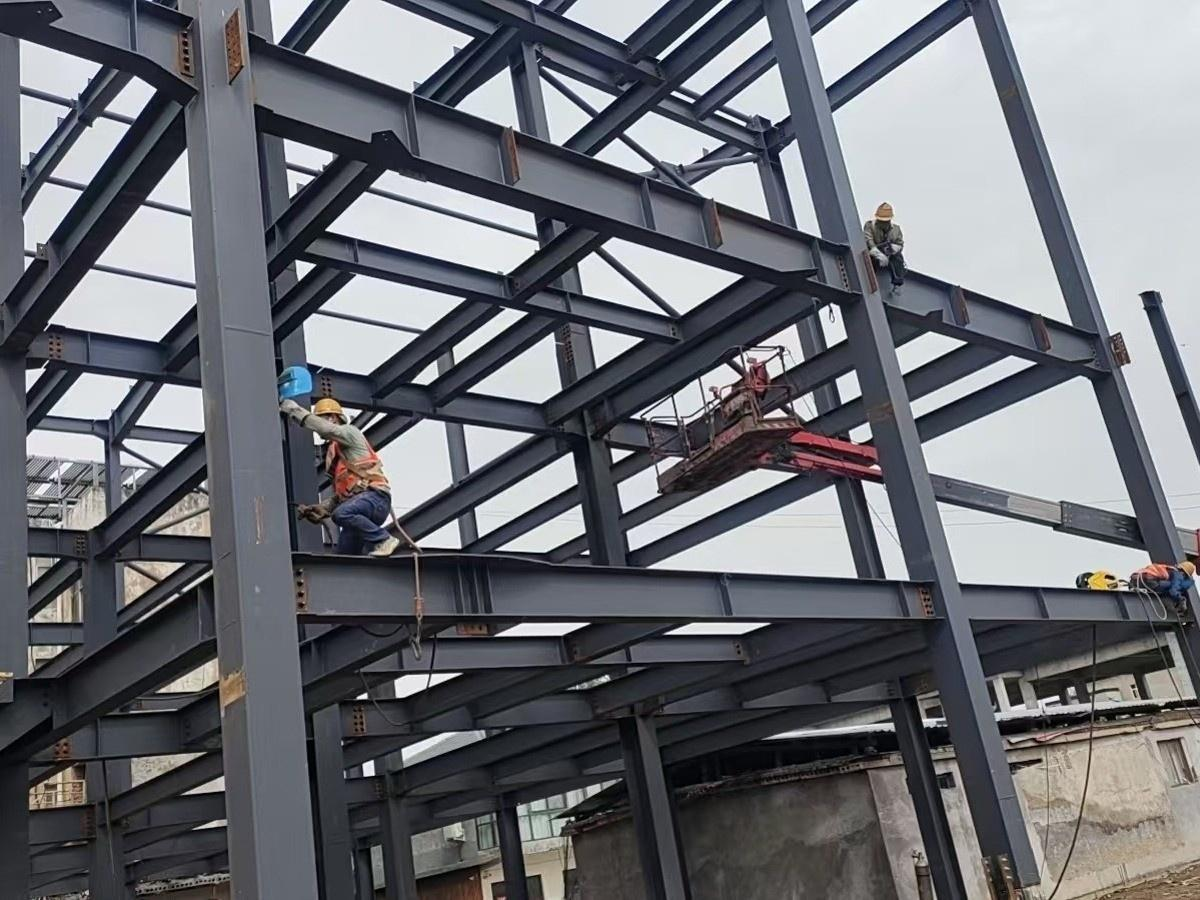
When every project is treated as an independent transaction, the supplier has little reason to reserve production capacity or standardize specifications for the buyer. Each order starts from zero: new drawings, new material approvals, and new commercial discussions. This adds risk, especially when projects are spread across different regions or delivered in phases.
The problem becomes more visible at execution stage. A buyer who has not verified capacity, lead times, quality control, and payment terms will struggle to scale from one prefabricated warehouse building to a full program. The result is often delayed shipments, inconsistent workshop building details, and higher total maintenance costs.
Industry Background: Prefabricated Steel Building Demand Is Becoming a Multi-Year Cycle
Global demand for prefabricated construction is broadening. According to IMARC Group, the global prefabricated building and structural steel market was valued at USD 260.6 billion in 2025. Grand View Research estimates the pre-engineered metal building segment alone at USD 44.1 billion in 2025, and projects it will reach USD 87.0 billion by 2033.
Regional demand is also visible. Technavio expects the Middle East and Africa steel building market to grow by USD 300.4 million during 2025-2030, with a CAGR of 4.1%. In Africa, steel production reached approximately 39.49 million tons in 2023, with projections of 51.86 million tons by 2032, according to the World Steel Association.
For buyers, this means steel building procurement is not a single purchase. It is a supply decision with long-term consequences.
What a Long-Term Prefabricated Steel Buildings Supplier Must Provide
A long-term supplier must provide more than a low quotation. The evaluation should cover design, fabrication capacity, customization, quality control, and commercial flexibility.
Integrated Design and Steel Structure Drawing Design
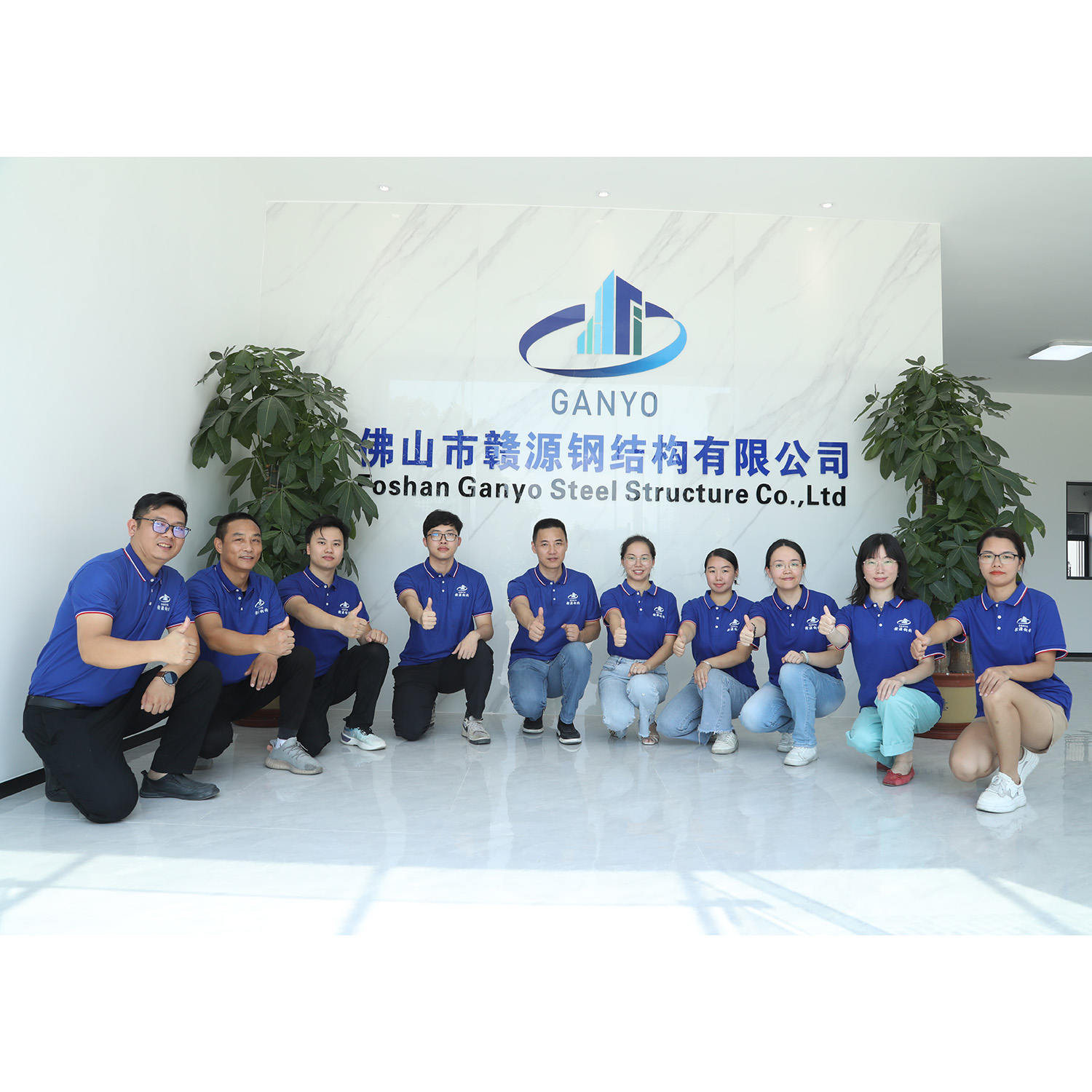
Foshan Ganyo Steel Structure Co., Ltd. (Ganyo) is a medium-sized manufacturer located in Gaoming District, Foshan City, Guangdong Province, China. It integrates steel structure design, research and development, production, and installation services. For a custom steel structure, drawing design should cover local site conditions such as location, dimensions, wind load, snow load, and seismic resistance.
Ganyo's product range includes prefabricated steel workshop and prefabricated steel warehouse, multi-storey steel structure buildings, custom prefabricated steel garage and steel shed, prefabricated houses, and container houses. A 12-person R&D team supports structural design and drawing development.
Stable Steel Structure Fabrication Capacity
Capacity is the first number to verify when planning multiple orders. Ganyo has two production factories and an annual steel structure output of 20,000 tons. Its monthly production capacity is 1,000-2,000 tons, and typical production lead time is 30-45 days.
Production equipment includes fully automatic steel structure production lines, H-shaped steel automatic assembly machines, and CNC flame cutting machines. For steel workshop projects or industrial steel warehouse programs, this type of lead time must be aligned with construction schedules.
Customization Across Building Types
Prefabricated steel buildings are rarely identical. Custom parameters include dimensions, wall type, insulation (EPS, fiberglass wool, rock wool, PU panel or plain steel sheet), doors and windows, and crane system. Structural material commonly used by Ganyo is Q355B or Q235B, depending on the project.
This applies to prefabricated metal buildings, steel frame buildings, commercial metal buildings, and heavy steel structure buildings. The selection of steel grade and section size must be checked against actual loading conditions.
Quality Control and Corrosion Protection
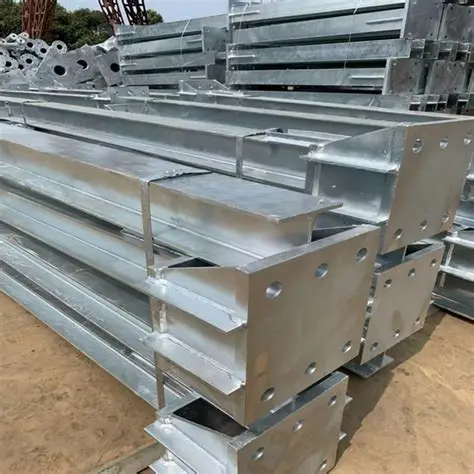
Corrosion is a central risk in coastal high-salt, high-humidity environments. Ganyo applies 100% hot-dip galvanizing treatment to all steel components, arranges third-party quality inspection for coating thickness, and provides long-term anti-corrosion warranty support.
Commercial Terms That Support Reordering
Long-term supply is easier when the commercial framework is repeatable. Ganyo quotes on FOB delivery terms, uses a 30/70 payment structure (30% deposit, 70% before shipment), and sets a minimum order quantity of 200 square meters. Pre-shipment testing is part of the acceptance process.
For buyers, a low MOQ allows a pilot order before a larger commitment. For distributors, FOB terms make it easier to compare freight and manage import logistics themselves.
Step-by-Step: From First Order to a Long-Term Supply Program
The following sequence helps buyers move from a single prefabricated steel warehouse to a repeatable procurement program.
- Define the building program. List building types, quantities, target countries, and site conditions. If you need a turnkey steel structure project, the supplier should be able to coordinate design, fabrication, and installation guidance.
- Verify steel structure drawing design support. Check whether the supplier can convert wind, snow, seismic, and roof load input into clear fabrication drawings.
- Audit fabrication capacity and lead time. Confirm monthly tonnage and typical production lead time. For Ganyo, monthly capacity is 1,000-2,000 tons and typical lead time is 30-45 days.
- Standardize specifications and materials. Choose Q355B or Q235B material, panel types, insulation, doors and windows, and crane loads before ordering.
- Align commercial terms. Confirm minimum order quantity, delivery method, payment split, and pre-shipment testing requirements.
- Plan corrosion protection and after-sales support. Specify hot-dip galvanizing, coating thickness inspection, and warranty expectations.
- Run a pilot order, then review. Use a 200-square-meter garage, shed, or small warehouse as a pilot project, then review quality, documentation, and delivery performance before scaling.
Use Cases: Applying Prefabricated Steel Buildings Across Project Types
Steel Structure Warehouse and Prefab Industrial Warehouse
Large-span design reduces the number of interior columns, creating unobstructed storage space. This makes steel structure warehouses and prefab industrial warehouses suitable for logistics parks, distribution centers, and manufacturing storage. For a prefabricated warehouse building, clear height and column spacing should be confirmed during the design stage.
Steel Workshop Buildings and Industrial Steel Buildings
Workshop buildings often need crane systems, larger bay spacing, and heavier steel sections. A custom steel structure can be designed with crane load and lifting height as input parameters, using Q355B or Q235B sections as required.
Commercial Metal Buildings and Multi-Storey Steel Structures
Retail halls, showrooms, and offices can be delivered as commercial metal buildings or multi-storey steel structures. The same design parameters, including dimensions, wind load, and seismic resistance, apply at each floor level.
Steel Structure Hangar Projects in Africa
For a steel structure hangar in Africa, span width, door openings, and wind loading are critical. Hot-dip galvanizing helps protect the frame in humid or coastal locations. Africa's growing construction sector is one reason why Ganyo exports mainly to markets under the Belt and Road Initiative and serves customers in more than 60 countries across Asia, Africa, and South America.
Cold Storage Steel Building and Heavy Steel Structure Buildings
Insulation choice becomes the main issue in a cold storage steel building. EPS, fiberglass wool, rock wool, and PU panels can be selected according to thermal requirements. For heavy steel structure buildings, frame stiffness and foundation design must be verified before fabrication.
Comparison: Prefabricated Steel Buildings vs. Traditional Concrete and Brick
For buyers choosing between construction methods, the following comparison is based on documented differences used in supplier evaluation.
| Criterion | Prefabricated Steel Building | Traditional Concrete and Brick |
|---|---|---|
| Construction method | Factory prefabrication and on-site dry assembly | Wet construction on site, weather-dependent |
| Construction period | Reduced by 30% to 50% | Longer construction cycle |
| Building self weight | About 1/2 to 1/3 of concrete buildings | Heavier, requiring a stronger foundation |
| Span capability | Large column spacing, fewer interior columns | More columns needed for large spaces |
| Seismic performance | High toughness, good ductility, energy dissipation | Higher rigidity, more brittle, prone to cracking in earthquakes |
| Environmental impact | Minimal construction waste; steel is 100% recyclable after demolition | Difficult to recycle and higher site waste |
| Comprehensive cost | Reported 10% to 20% lower, especially in foundation | Higher foundation and labor cost |
| Maintenance | Regular anti-corrosion and fire prevention maintenance | -- |
This comparison does not mean steel is suitable for every site. Concrete can still be preferred where local codes, material availability, or specific design requirements favor it.
FAQ: Long-Term Sourcing for Prefabricated Steel Buildings
Which compliance documents should distributors check before entering a long-term prefabricated steel buildings contract?
For EU destinations, steel structures must be CE marked according to EN 1090-1. In North America, AISC 360 is the primary design and construction standard for structural steel buildings. Buyers should verify that the certificate belongs to the actual production plant and request material certificates, welding procedures, and coating thickness reports for each batch.
How can a buyer confirm a supplier can handle repeat prefabricated steel buildings orders?
Ask for verifiable production capacity. Ganyo's monthly production capacity is 1,000 to 2,000 tons, backed by an annual steel structure output of 20,000 tons and a 12-person R&D team. For a long-term program, capacity must be checked against the buyer's order calendar.
What payment and order terms should be expected for a prefabricated steel building program?
Many manufacturers quote on FOB terms with a 30/70 payment split: 30% deposit to start fabrication and 70% before shipment. Ganyo's minimum order quantity is 200 square meters, making a first pilot order possible before scaling.
Can a buyer validate a supplier with a pilot order before a large program?
Yes. A small warehouse, workshop, or steel shed within the 200-square-meter MOQ can serve as a pilot order. Ganyo supports custom design parameters and offers pre-shipment testing, so the buyer can check drawings, fabrication quality, packaging, and documentation before committing to a larger volume.
What lead time should be planned for prefabricated steel buildings in an ongoing program?
Ganyo's typical production lead time is 30 to 45 days, depending on design confirmation and material availability. Buyers with distribution or multi-site plans should schedule orders against this window and align shipping dates with FOB delivery. For current lead times and a project-based quotation, contact Lizzy at lizzy@ganyosteelbuilding.com or WhatsApp +86 13516623561.
Conclusion: A Supplier Is a Long-Term System, Not a Transaction
Prefabricated steel buildings are a repeatable investment for many buyers. The supplier that supports multiple projects must show stable capacity, reliable drawing and fabrication quality, clear commercial terms, and practical after-sales protection. That is why procurement teams should evaluate a partner like Ganyo against these criteria before the first order, not after the third one.
Download the Ganyo company brochure to review product scope and production capabilities: Download Brochure (PDF)
For a custom quotation or current lead time, contact Lizzy at lizzy@ganyosteelbuilding.com or WhatsApp +86 13516623561.
Ganyo is located at Changyaogang Development Zone, Lutang Village, Yanghe Town, Gaoming District, Foshan City, Guangdong Province, China.
Have Questions or Need More Details?
Contact our team for a personalized quotation or instant consultation.
Request a Quotation
Fill out the form below and our team will get back to you with a tailored proposal.
WhatsApp Direct Chat
Prefer to chat in real-time? Message us on WhatsApp for instant assistance & quick answers.
- Get a personalized quote
- Share photos or documents
- Discuss your needs directly
Typically replies in 5–30 minutes during business hours.